



What You’ll Learn:
- Why 83% of AI Overview searches end without clicks—and how to capture value anyway
- The 10 strategies that drive AI citations and maintain visibility in zero-click search
- How brands cited in AI Overviews get 35% more organic clicks and 23x better conversions
The numbers don’t lie, but they might surprise you.
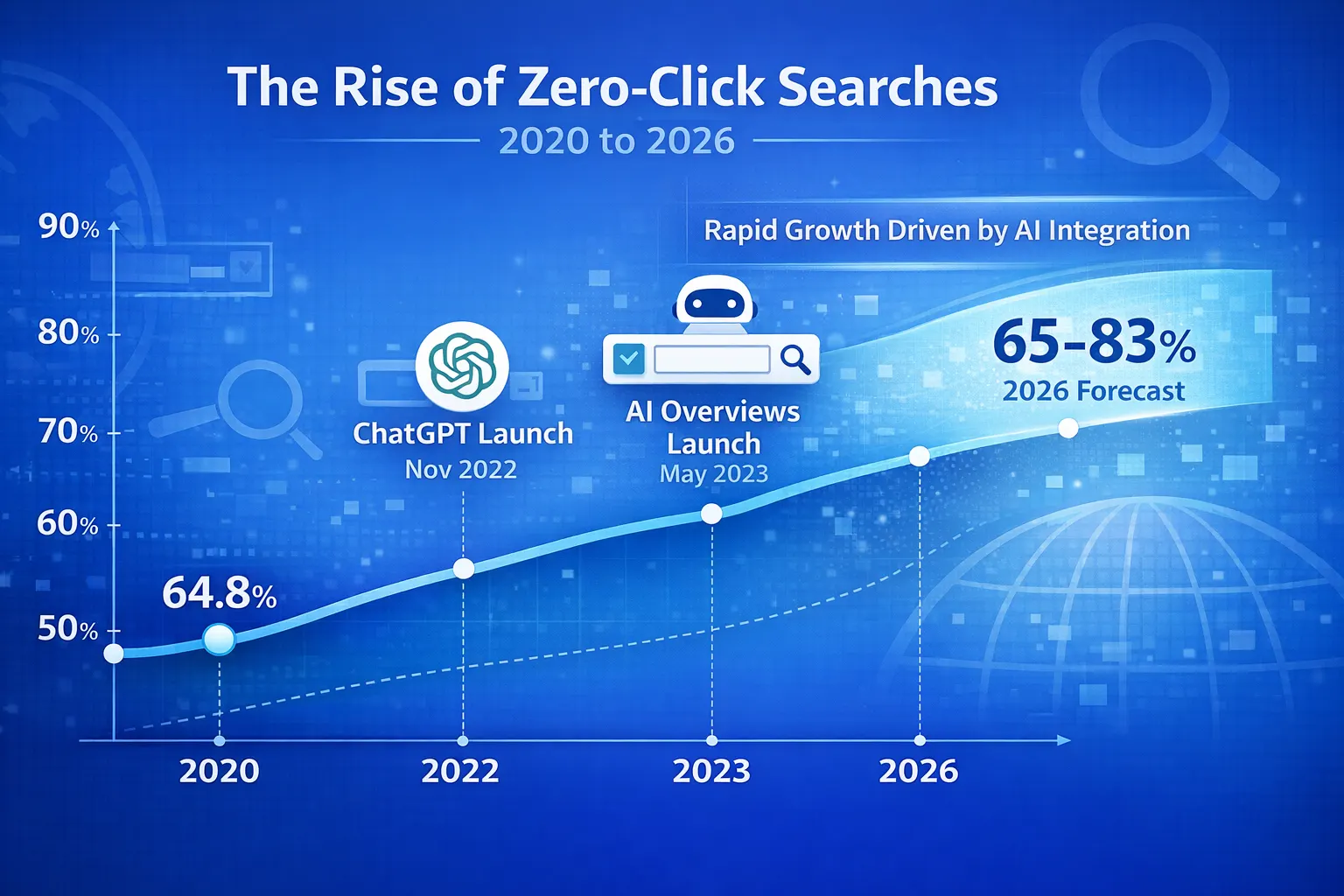
More than 65% of Google searches now end without a single click to any website. For queries that trigger AI Overviews, that number jumps to 83%. Across the EU, it’s 59.7%. In the United States, 58.5% of searches conclude entirely within Google’s interface.
If you’re still measuring SEO success purely by organic traffic, you’re tracking the wrong metric. You’re also missing the biggest shift in search behavior since Google introduced featured snippets over a decade ago.
This isn’t a future prediction. This is the reality marketers are facing right now.
The question isn’t whether zero-click search will impact your business. It’s whether you’ll adapt your strategy before your competitors do—or watch your visibility evaporate as AI answer engines become the primary interface between users and information.
This guide breaks down exactly what’s happening, why it matters, and the 10 proven strategies that maintain visibility when traditional clicks disappear.
The Zero-Click Revolution: Understanding the Shift
What Zero-Click Search Actually Means
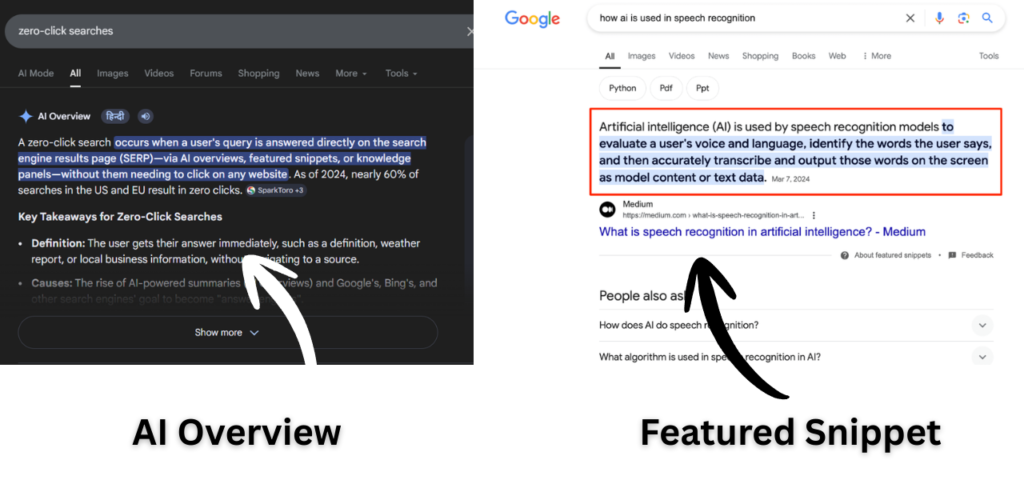
Zero-click search occurs when users find their answer directly on the search engine results page without visiting any external website. Google delivers this through multiple SERP features:
AI Overviews – AI-generated summaries appearing above organic results, synthesizing information from multiple sources
Featured Snippets – Extracted text blocks answering specific queries
Knowledge Panels – Information boxes displaying facts about entities
People Also Ask – Expandable question boxes with brief answers
Local Packs – Map-based results showing business information
The critical difference in 2026: AI Overviews don’t just extract from one source. They synthesize multiple pages into a single answer, then cite select sources. Being cited matters more than ranking #1.
The Data That Changed Everything
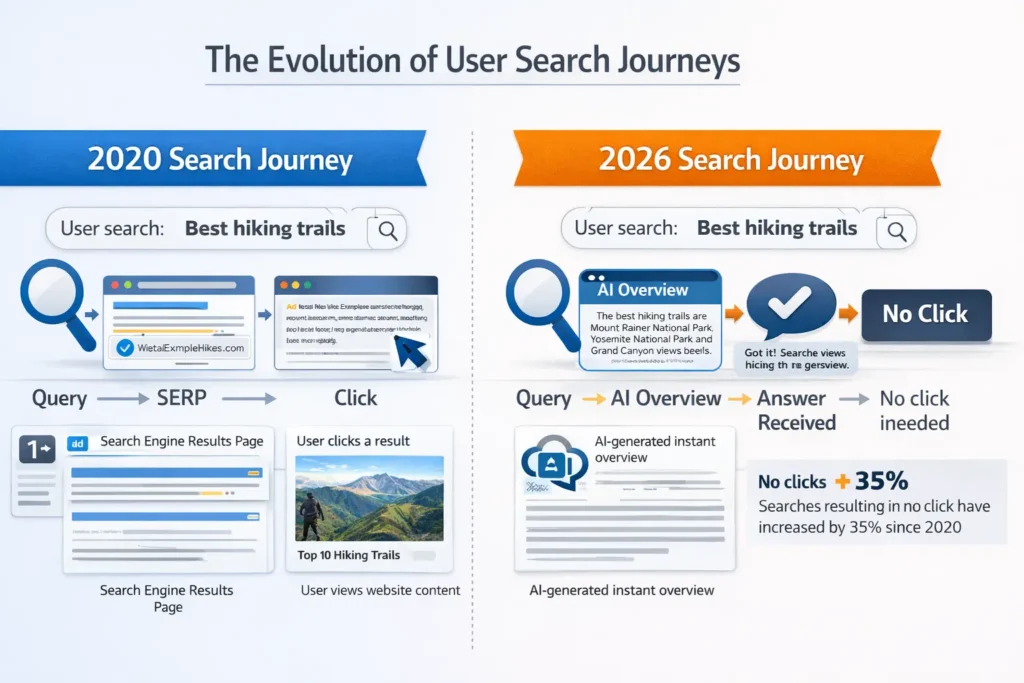
The shift accelerated dramatically when Google deployed AI Overviews at scale. Here’s what the numbers reveal:
Searches triggering AI Overviews show an average zero-click rate of 83%, while traditional queries without AI Overviews average around 60%. That’s a 23-percentage-point gap that’s reshaping traffic patterns across the web.
Organic click-through rates for queries featuring Google’s AI Overviews have plummeted by 61% since mid-2024, dropping from 1.76% to just 0.61%. For paid search, the impact hit even harder—a 68% CTR decline.
ChatGPT now serves 810 million daily users, while Google AI Overviews reach 1.5 billion monthly users. The debate about whether AI search matters is over.
Mobile users face an even steeper decline. 77.2% of mobile searches now end without clicks, compared to lower rates on desktop.
Key insight: The percentages vary by query type. Informational queries see the highest zero-click rates. Transactional searches with clear purchase intent remain more click-driven. But the trend is unmistakable across all categories.
Why This Happened—and Why It’s Accelerating
Three converging forces drove the zero-click explosion:
1. User Behavior Evolved
About 80% of consumers now rely on zero-click results in at least 40% of their searches. This is learned behavior. Every time someone gets a complete answer without clicking, they learn clicking is unnecessary.
2. AI Technology Matured
Google’s Gemini model, ChatGPT, Perplexity, and other LLMs can now synthesize information from multiple sources into coherent, citation-backed answers. They use query fan-out—breaking complex questions into sub-queries and combining responses from multiple pages.
3. Platform Incentives Aligned
Google’s objective shifted from “send users to the best website” to “satisfy the query within our interface.” AI Overviews, featured snippets, and knowledge panels all serve this goal.The acceleration continues. Google’s experimental AI Mode produces a zero-click rate of 93%—more than double regular AI Overviews. In 75% of AI Mode sessions, users never leave Google at all.
The Business Impact: What Zero-Click Means for Revenue
The Traffic Challenge
Publishers saw the impact first. News publishers’ organic visits plummeted from over 2.3 billion in mid-2024 to under 1.7 billion by May 2025, while zero-click results for news searches surged from 56% to 69%.
E-commerce faces different pressures. Informational product queries like “best running shoes for flat feet” are increasingly answered by AI Overviews that summarize product recommendations without users visiting any shop. Retail keywords triggering AI Overviews surged 206% between January and March 2025.
But transactional searches remain more protected. Queries like “buy Nike Air Max size 10” still drive clicks because users need to complete the purchase.
The pattern: Generic informational content loses traffic. Brand-specific searches and transactional intent maintain clicks.
The Hidden Opportunity
Here’s what most coverage misses: Brands cited in AI Overviews receive 35% more organic clicks, and the remaining traffic converts 23x better.
Zero-click doesn’t mean zero value. It means value shows up differently:
Brand Awareness – Your content appears in AI summaries without the user visiting your site, building recognition
Trust Signals – Being cited by AI validates authority
Qualified Traffic – Users who do click are further down the funnel
Assisted Conversions – AI citations influence later direct searches and purchases
The brands winning in 2026 optimize for visibility first, traffic second.
From SEO to AEO: The Strategy Shift
What Answer Engine Optimization Actually Is
Answer Engine Optimization (AEO) is the practice of structuring content so AI-powered platforms can easily discover, understand, and cite your information as direct answers to user queries.
Traditional SEO goal: Rank high enough to earn the click
AEO goal: Become the cited source in the answer itself
They’re not competing strategies. They’re complementary. Strong SEO creates the foundation—crawlability, authority, technical excellence. AEO builds on top of that foundation to optimize for AI extraction and citation.
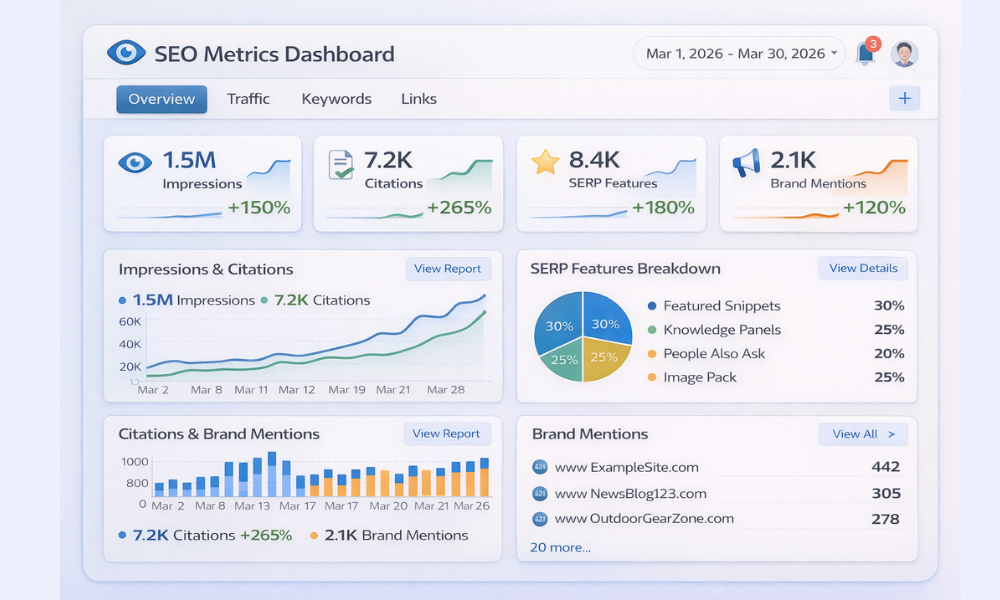
The New Success Metrics
Traffic-only measurement is obsolete. Here’s what to track in 2026:
AI Visibility Score – How often your brand appears in AI-generated answers for target queries
Citation Frequency – Number of times AI systems cite your content
Impression Share – Total visibility across SERP features, not just organic listings
Featured Snippet Wins – Percentage of target queries where you own the snippet
Brand Mention Tracking – How often AI mentions your brand across platforms
Tools like Semrush, BrightEdge, and specialized platforms now track these metrics. Google Search Console added data on how content appears in AI features.
The mindset shift: Visibility became more valuable than clicks. A brand can dominate the conversation even without earning the click.
10 Proven SEO Strategies for the Zero-Click Era
Strategy #1: Optimize for AI Citations
AI systems need content they can extract, verify, and cite. That requires specific structural choices.
The 50-Word Answer Block Technique
Place a clear, concise 40-60 word answer at the top of each content section. This makes it easy for LLMs to extract your answer without processing thousands of words.
Example structure:
H2: What is Answer Engine Optimization?
Answer Engine Optimization (AEO) is the practice of structuring content so AI platforms can easily discover, understand, and cite your information when answering user queries. Unlike traditional SEO which targets rankings, AEO focuses on citation-worthiness and machine readability.
[Continue with deeper explanation…]
Structured, Scannable Formatting
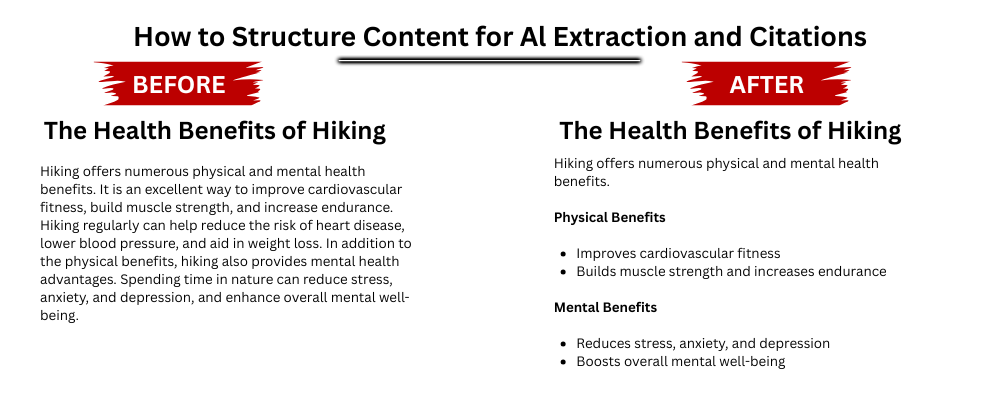
AI models extract information more successfully from:
- Short paragraphs (2-3 sentences)
- Bullet points for lists
- Tables for data comparisons
- Clear subheadings (H2, H3)
- Bold text for key terms
Clear, Declarative Statements
Write in subject-predicate-object format. “X is Y” rather than “It’s been suggested that X might be considered Y under certain circumstances.”
Strategy #2: Master Structured Data & Schema Markup
Structured data is no longer optional. Products with complete schema markup are 4.2x more likely to appear in Google Shopping results.
Essential Schema Types:
Article Schema – Headline, author, date published, image
FAQ Schema – Question-answer pairs (prime AI extraction targets)
HowTo Schema – Step-by-step instructions with clear ordering
Product Schema – Price, availability, ratings, specifications
Organization Schema – Entity information for knowledge panels
Review Schema – Aggregate ratings and individual reviews
Implementation Priority:
JSON-LD format (Google’s recommended standard). Clean, separated from HTML, machine-readable.
Example:
json
{
  "@context": "https://schema.org",
  "@type": "FAQPage",
  "mainEntity": [{
    "@type": "Question",
    "name": "What is zero-click search?",
    "acceptedAnswer": {
      "@type": "Answer",
      "text": "Zero-click search occurs when users find their answer directly on the search results page without clicking any website. This happens through AI Overviews, featured snippets, and knowledge panels."
    }
  }]
}
Use Google’s Rich Results Test and Schema Markup Validator to verify implementation.
Strategy #3: Build Topical Authority
AI models evaluate not just individual pages, but your entire content network around a topic.
The “Long Long Tail” Approach
Cover the full topic terrain—breadth across sub-questions and depth across nuances. Create interconnected articles that demonstrate comprehensive expertise.
Content Cluster Architecture:
- 1 Pillar Page (comprehensive overview)
- 8-12 Cluster Pages (specific sub-topics)
- Strong internal linking between related pages
- Consistent terminology and entity references
Why This Works:
When AI systems encounter your content repeatedly across related queries, they begin treating your domain as an authoritative source for that topic cluster. This increases citation probability.
Strategy #4: Implement E-E-A-T Signals
Experience, Expertise, Authoritativeness, and Trustworthiness aren’t just Google ranking factors. They’re AI citation factors.
Author Credentials
- Bylines with real names
- Author bio pages with expertise details
- Professional credentials and certifications
- Links to author social profiles
Original Research & Data
AI systems prioritize content with unique, verifiable information. Conduct surveys, compile statistics, run experiments. Proprietary data earns citations.
Expert Quotes & Citations
Interview industry experts. Cite peer-reviewed research. Link to authoritative sources. This builds trust signals.
Transparent Sourcing
When making claims, cite your sources clearly. Use inline links to original research. AI systems can verify claims against cited sources.
Strategy #5: Optimize for Featured Snippets
Featured snippets remain a powerful zero-click opportunity. Here’s how to win them:
Question-Based Content Structure
Target actual user questions. Use tools like AnswerThePublic, AlsoAsked, and “People Also Ask” boxes to find question patterns.
Direct Answer Format
Answer the question in the first paragraph, then expand. The direct answer should be 40-60 words.
Lists, Tables, and Steps
Google pulls featured snippets from:
- Numbered lists (steps, rankings)
- Bulleted lists (items, features)
- Tables (comparisons, data)
- Definition paragraphs
Target “People Also Ask”
These questions feed AI summaries directly. Answering PAA questions increases your citation chances.
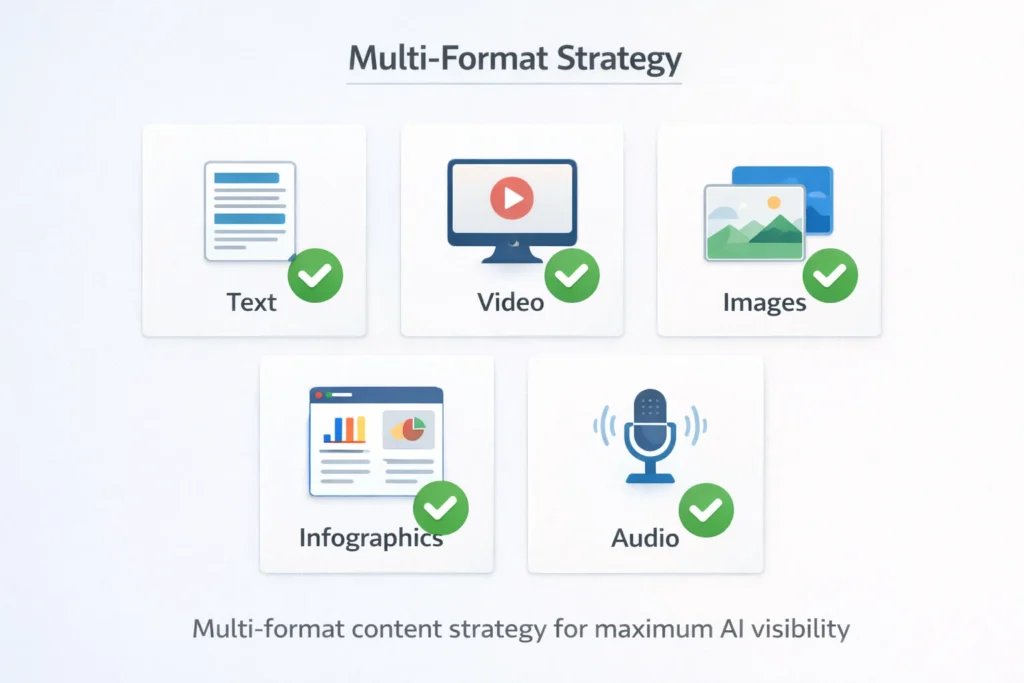
Strategy #6: Create Multi-Format Content
AI systems pull from diverse content types. Optimize across formats:
Video Optimization
YouTube is one of the most cited sources in AI search. Create videos with:
- Detailed descriptions
- Timestamped chapters
- Accurate transcripts
- Relevant thumbnails
Image Optimization
- Descriptive file names (not IMG_1234.jpg)
- Comprehensive alt text
- Image schema markup
- High-quality, original images
Infographics & Visual Data
Original visual content gets cited. Create charts, diagrams, and infographics with clear data sourcing.
Podcast Transcripts
Publish full transcripts alongside audio. This makes spoken content extractable by AI.
Strategy #7: Focus on Brand Building
Brand search is the safest traffic channel in 2026. When users search for your brand name, zero-click doesn’t apply—they’re looking for you specifically.
Cross-Platform Presence
Maintain active profiles on:
- LinkedIn (professional authority)
- YouTube (video content)
- Industry forums and communities
- Podcast appearances
- Speaking engagements
Digital PR and Earned Media
With AI systems pulling from the entire web, earned media coverage becomes powerful. Get mentioned in:
- Industry publications
- News outlets
- Analyst reports
- Case studies
- Expert roundups
Social Signals and Mentions
While social links may be nofollow, brand mentions across platforms contribute to entity recognition. AI systems notice consistent brand mentions.
Strategy #8: Platform Diversification (Search Everywhere Optimization)
Google isn’t the only answer engine. Optimize for the full ecosystem:
ChatGPT Optimization
- Create clear, factual content
- Use semantic triples (subject-predicate-object)
- Provide context-rich information
- Build backlinks from cited sources
Perplexity Optimization
- Focus on recent, well-sourced content
- Include publication dates
- Link to authoritative sources
- Update content regularly
Claude, Gemini, and Others
Each AI has different source preferences. Diversify your optimization approach.
Voice Search
Optimize for conversational queries. Use natural language, question-answer format, and local business schema.
Strategy #9: Technical Foundation Excellence
AI crawlers need clean, accessible content. Technical SEO matters more than ever.
Core Web Vitals
Page speed impacts crawlability. Faster pages get crawled more frequently and thoroughly.
Mobile Optimization
With 77.2% mobile zero-click rate, mobile-first is mandatory.
Clean HTML Structure
Semantic HTML helps AI understand content hierarchy:
- Proper heading tags (H1, H2, H3)
- Meaningful list elements
- Table markup for data
- Clear navigation
Crawlability for AI Bots
Don’t block GPTBot, ClaudeBot, PerplexityBot, or other AI crawlers unless you have specific licensing concerns. Blocking them removes you from AI citations entirely.
XML Sitemaps
Keep sitemaps comprehensive and current. Help AI crawlers discover all your content.
Strategy #10: Create Proprietary Assets
The most defensible content is what others can’t replicate.
Original Data and Research
Conduct surveys. Analyze industry data. Publish findings. When you own the data, AI must cite you.
Unique Frameworks and Methodologies
Create named systems: “The [YourBrand] Framework,” “The [YourBrand] Score.” When AI references your methodology, attribution is unavoidable.
Thought Leadership
Opinionated, perspective-driven content is harder for AI to synthesize. Expert commentary, predictions, and analysis remain citation-worthy.
Tools and Calculators
Interactive tools generate links and citations. Create ROI calculators, assessment tools, or generators relevant to your industry.
Content Creation for AI Visibility
Writing for Machines AND Humans
The best content serves both audiences simultaneously.
For Humans:
- Engaging narratives
- Personality and voice
- Persuasive arguments
- Emotional resonance
For AI:
- Clear structure
- Factual statements
- Extractable data
- Verifiable claims
The Balance: Start with a concise, extractable answer. Then expand with human-friendly depth, examples, and context.
Content Formats That Win
Certain formats perform exceptionally well in zero-click environments:
Ultimate Guides – Comprehensive resources covering topics exhaustively
How-To Tutorials – Step-by-step instructions with clear ordering
Comparison Articles – Side-by-side analysis with tables or structured comparisons
Data-Driven Research – Original statistics and findings
FAQ Sections – Question-answer pairs optimized for extraction
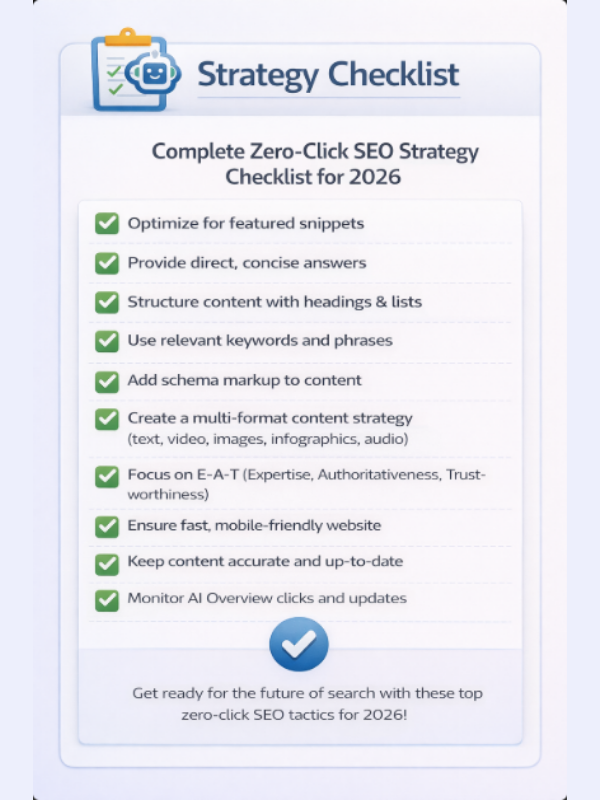
The AI-Friendly Content Checklist
Before publishing, verify:
✅ Concise answer in first 60 words
✅ Logical H2/H3 subheading hierarchy
✅ Short paragraphs (2-3 sentences)
✅ Tables for data comparisons
✅ Bullet points for lists
✅ Clear definitions for key terms
✅ Proper schema markup implemented
✅ Author credentials visible
✅ Sources cited and linked
✅ Mobile-friendly formatting
Measuring Success in the Zero-Click Era
New KPIs to Track
Impression Share: Total visibility across all SERP features. A high impression share with low CTR might indicate strong AI citation presence.
Featured Snippet Wins: Percentage of target queries where you own the featured snippet or appear in “People Also Ask.”
AI Citation Frequency: Use tools like Profound, Semrush, or Advanced Web Ranking to track mentions across ChatGPT, Perplexity, Gemini, and other platforms.
Brand Mention Monitoring: Track unlinked brand mentions across the web. These contribute to entity recognition and AI awareness.
Qualified Traffic Quality: Measure conversion rates, not just volume. Zero-click environments drive fewer but higher-intent visitors.
Tools for Monitoring
Google Search Console
Track impressions vs clicks. Monitor which queries trigger enhanced results. Analyze position vs CTR patterns.
AI Mention Trackers
- Semrush (AI search visibility tracking)
- BrightEdge (agentic crawler monitoring)
- Advanced Web Ranking (multi-platform tracking)
- Profound (AI citation monitoring)
SERP Feature Tracking
- Ahrefs (SERP feature history)
- SEMrush (Position Tracking with SERP features)
- Moz (Rank tracking with feature analysis)
ROI in the Zero-Click Era
Measure beyond direct traffic:
Brand Awareness Metrics
- Branded search volume growth
- Direct traffic increases
- Social media mentions
Downstream Conversions
- Assisted conversions in GA4
- Multi-touch attribution
- Time lag between first exposure and conversion
Customer Lifetime Value
Higher-quality zero-click traffic often converts at better rates and generates higher LTV.
What NOT to Do: Common Mistakes
Ignoring Zero-Click Entirely
Pretending the shift isn’t happening guarantees irrelevance. Brands that don’t adapt will lose visibility as competitors optimize for citations.
Creating Thin, AI-Generated Content
While AI tools can improve SEO rankings by 49.2% when used strategically SEOmator, thin content won’t earn citations. AI systems preferentially cite content with verifiable added value.
Focusing Only on Traffic Metrics
If you’re only tracking clicks, you’re missing 65-83% of your actual visibility.
Blocking AI Crawlers
Unless you have specific licensing concerns, blocking AI crawlers removes you from AI citations completely. You lose visibility across ChatGPT, Perplexity, Claude, and other platforms.
Neglecting Brand Building
In a zero-click world, brand recognition becomes your moat. Users who know your brand will search for you directly, bypassing zero-click.
Using Black-Hat Tactics
Prompt injection, keyword stuffing for AI, or trying to manipulate LLMs will backfire. AI systems detect manipulation attempts and devalue sources.
The Future: What’s Coming Next
Emerging Trends
Agentic AI Commerce
AI is moving from recommending products to executing purchases directly within conversations. OpenAI’s Agentic Commerce Protocol allows transactions without users leaving the AI interface.
AI-to-AI Communication
Future systems will feature agents communicating directly with each other. Your content becomes the trusted data source they reference.
Voice Commerce Growth
Voice commerce is projected to reach $80 billion in annual value. Optimize for voice-friendly queries and speakable schema.
Multimodal Search
Visual + voice search combined. Google Lens, image recognition, and voice queries merge into unified experiences.
Preparing for 2027 and Beyond
Continuous Content Updates
Freshness matters. Brands leading in AEO update content quarterly. Stale content loses citations.
Platform Agility
New AI platforms will emerge. Stay flexible. Don’t over-optimize for a single platform.
Experimental Mindset
The AI search landscape changes rapidly. What works today may not work in three months. Test, measure, iterate.
Investment in Authority
Proprietary data, expert content, and thought leadership remain defensible. These assets compound in value.
Your Action Plan: Next Steps
Week 1: Assessment
- Audit current zero-click impact using Search Console
- Identify which queries show high impressions but low clicks
- Check if you’re being cited in AI platforms
- Review structured data implementation
Month 1: Quick Wins
- Add FAQ schema to key pages
- Optimize top 10 pages with answer blocks
- Claim and optimize all business listings
- Implement author bylines and credentials
Quarter 1: Foundation Building
- Create topic clusters around core subjects
- Develop proprietary research or data
- Build multi-format content (video, infographics)
- Establish brand presence across platforms
Ongoing: Measurement and Iteration
- Track new metrics (citations, impressions, brand mentions)
- Update content quarterly
- Test new platforms as they emerge
- Monitor competitor AI visibility
Conclusion: Opportunity, Not Crisis
Zero-click search represents the most significant shift in digital marketing since Google launched. But it’s not the death of SEO—it’s evolution.
The brands that will dominate in 2027 and beyond are those investing now in:
- Citation-worthy content
- AI-friendly technical infrastructure
- Multi-platform visibility
- Brand authority signals
- Proprietary data assets
Traditional ranking still matters. Technical SEO remains essential. But the ceiling for success has expanded far beyond “rank #1 and get clicks.”
In 2026, winning means becoming the most trusted, extractable, citation-worthy source across every platform where your audience searches—whether that’s Google, ChatGPT, Perplexity, or whatever emerges next.
The question isn’t whether to adapt. It’s whether you’ll adapt before your competitors do.
Start implementing these strategies today. Track your AI citations tomorrow. Dominate visibility in 2027.

1 Comment
Pingback: How AI Overviews Are Killing Organic Traffic (2026)